Cupping Therapy is a complementary physiotherapy technique that uses controlled suction over selected areas of the body. At Rehab Care Physiotherapy Clinic in Janakpuri, cupping may be included as part of an individualized rehabilitation plan for selected muscular, soft-tissue and musculoskeletal conditions when clinically appropriate.
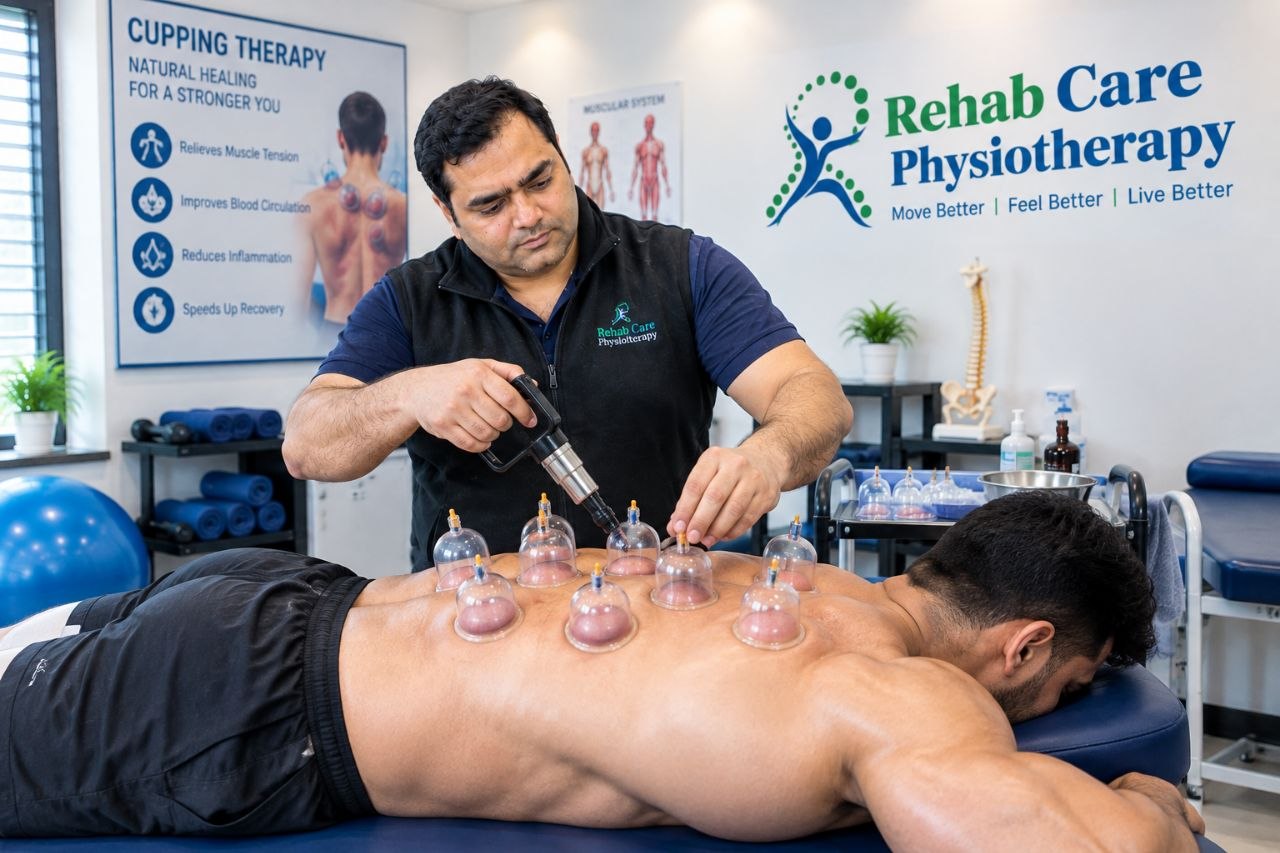
Cupping Therapy is a technique in which specially designed cups are placed on the skin to create controlled suction. Physiotherapists may use this technique as an adjunct to other rehabilitation methods depending on the individual's symptoms, movement limitations and treatment goals.
Cupping may be used alongside exercise therapy, manual therapy, mobility work, stretching, strengthening and activity modification. It is not considered a replacement for a complete physiotherapy assessment and rehabilitation program.
At Rehab Care Physiotherapy Clinic in Janakpuri, the suitability of cupping is considered after assessing the patient's condition, treatment area, medical history and rehabilitation requirements.
Cupping intensity, duration and treatment areas should be selected according to individual clinical needs. Our approach focuses on using cupping only when it is appropriate as part of the overall rehabilitation plan.
Cupping can sometimes be used as an adjunct to physiotherapy for selected muscular and soft-tissue complaints.
Cupping may be incorporated into treatment for selected areas of muscular tightness along with mobility and exercise-based rehabilitation.
For suitable patients, cupping may be used as an adjunct for muscular discomfort around the back, neck and shoulder region.
Active individuals may receive cupping as part of a broader recovery and sports physiotherapy program when appropriate.
Selected soft-tissue complaints may be addressed using cupping together with other physiotherapy techniques.
When muscle or soft-tissue restrictions contribute to limited movement, cupping may be considered alongside mobility exercises.
Cupping may be considered for selected exercise-related muscular complaints as part of an appropriate recovery plan.
The purpose of cupping is individualized and may form only one part of a complete physiotherapy rehabilitation program.
Our physiotherapy approach combines appropriate hands-on techniques with active rehabilitation and functional recovery.
Your symptoms, movement, functional limitations and medical history are assessed before selecting treatment techniques.
Cups are placed over selected treatment areas according to the clinical objective and individual tolerance.
Suction and treatment duration can be adjusted according to the patient's comfort and clinical requirements.
Appropriate stretching, mobility, strengthening or functional exercises may be included with treatment.
Patients may receive guidance about exercise, workload, posture and activity modification when required.
Symptoms, movement and functional progress are reviewed to determine whether the rehabilitation plan needs adjustment.
Physiotherapy is not limited to a single treatment technique. Depending on the condition, a therapist may combine manual techniques, exercise therapy, education and other clinically appropriate modalities.
Cupping may be considered when the therapist believes it can complement the rehabilitation plan. The treatment is selected according to the individual's symptoms, examination findings and tolerance.
The long-term focus remains restoring movement, building strength and helping the patient return to meaningful daily, work or sports activities.
Cupping should be viewed as one possible component of physiotherapy. A complete rehabilitation program may also include exercise, strengthening, mobility work, education and progressive activity.
Cupping intensity and treatment areas are selected according to clinical assessment, treatment goals and patient comfort.
Active participation between treatment sessions can be an important part of physiotherapy recovery.
Your physiotherapist may recommend suitable mobility, stretching or strengthening exercises to continue at home.
Guidance may be provided on managing exercise intensity, workload and daily activities during recovery.
Your rehabilitation plan can be gradually progressed as symptoms, movement and functional capacity improve.
Temporary circular marks or skin discoloration can occur after cupping and may last for several days. If you experience unusual, severe or persistent symptoms after treatment, contact your healthcare professional.
The ultimate goal of physiotherapy is to help patients improve movement and safely return to their desired activities.
Rehabilitation may focus on walking tolerance, foot mobility and strength where required.
Mobility exercises can help restore comfortable movement of relevant joints.
Progressive strengthening can help improve capacity for work, exercise and daily activities.
Treatment may focus on making everyday activities more comfortable and manageable.
Active individuals can progress through sport-specific rehabilitation according to their goals and capacity.
Exercise and activity levels can be gradually increased as function improves.
Safe treatment starts with appropriate patient assessment and selection of the treatment area and technique.
Before cupping, inform your physiotherapist about your medical history, medications and any skin or circulation-related concerns. The treatment area, suction level and duration should be selected according to your individual circumstances.
Tell your therapist if you have a bleeding or clotting disorder, take medicines that affect bleeding, have an active skin infection or open wound, are recovering from surgery or have another medical condition that may affect treatment suitability. Your clinician can determine whether cupping is appropriate.
Cupping should not be used to delay medical evaluation of sudden severe pain, major injury, unexplained swelling, significant weakness or numbness, fever, infection or other concerning symptoms.
Suitability depends on the individual's condition and clinical assessment.
Individuals with selected muscular discomfort or tightness may be considered for cupping as part of physiotherapy.
Athletes and active people may receive cupping as an adjunct to a broader sports rehabilitation program.
Some people with ongoing musculoskeletal symptoms may be assessed for cupping alongside active rehabilitation and appropriate clinical management.
Advanced physiotherapy support for selected muscular, soft-tissue and musculoskeletal conditions.
Looking for Cupping Therapy in Janakpuri? Rehab Care Physiotherapy Clinic provides physiotherapy services in Janakpuri, New Delhi, with individualized treatment plans based on clinical assessment.
Our Cupping Physiotherapy in Janakpuri may be considered for selected muscle tightness, soft-tissue discomfort, sports recovery and musculoskeletal rehabilitation requirements.
People searching for Cupping Treatment in Janakpuri, Dry Cupping Therapy Janakpuri, Sports Cupping Janakpuri, Cupping Physiotherapy West Delhi or advanced physiotherapy in Janakpuri can consult our physiotherapy team for an individual assessment.
We also serve patients from nearby areas including Vikaspuri, Uttam Nagar, Tilak Nagar, Hari Nagar, Paschim Vihar and Dwarka.
Rehab Care Physiotherapy Clinic is located at: A4C/103, Ground Floor Janakpuri, market, opposite posangipur, New Delhi, Delhi 110058 .
If you are searching for Cupping Therapy near Janakpuri or Cupping Physiotherapy in West Delhi, contact the clinic to discuss your condition and appointment availability.
Common questions about Cupping Therapy and physiotherapy rehabilitation.
Cupping Therapy is a technique that uses controlled suction through cups placed on selected areas of the body. It may be used as an adjunct to physiotherapy for suitable muscular and soft-tissue conditions.
Depending on the individual assessment, cupping may be considered for selected muscle tightness, soft-tissue discomfort, sports recovery and musculoskeletal rehabilitation. It is generally used alongside other physiotherapy approaches rather than as a standalone cure.
Cupping can create a pulling or tight sensation. Treatment intensity should be adjusted according to the patient's comfort and clinical requirements. Temporary circular skin marks or discoloration can occur after treatment.
Session duration depends on the condition, treatment plan, number of areas being treated and other physiotherapy techniques included in the appointment.
Cupping is generally considered an adjunct technique. Depending on the condition, a rehabilitation plan may also include exercise therapy, strengthening, mobility work, education and activity modification.
Cupping Therapy is available at Rehab Care Physiotherapy Clinic, A4C/103, Ground Floor Janakpuri market, opposite Posangipur, New Delhi, Delhi 110058. Call +91 9899527301 for appointment information.
If you are experiencing muscle tightness, soft-tissue discomfort, sports-related muscular problems or other musculoskeletal symptoms, consult a physiotherapist for an appropriate assessment and individualized rehabilitation plan.
Book Cupping Therapy